How Do We See Art?, 2025
Pen, Paper, Existing Artwork, Two People
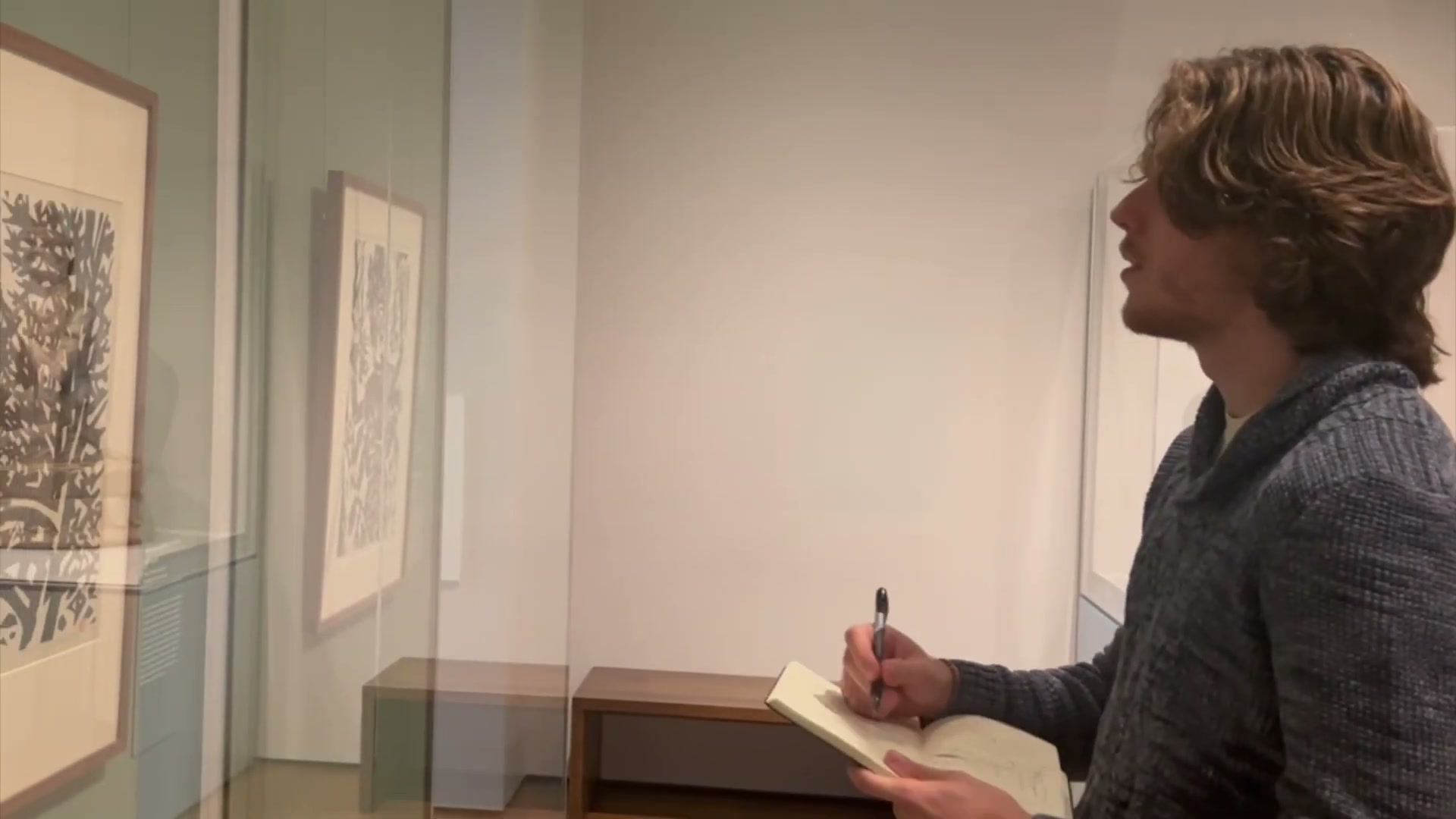
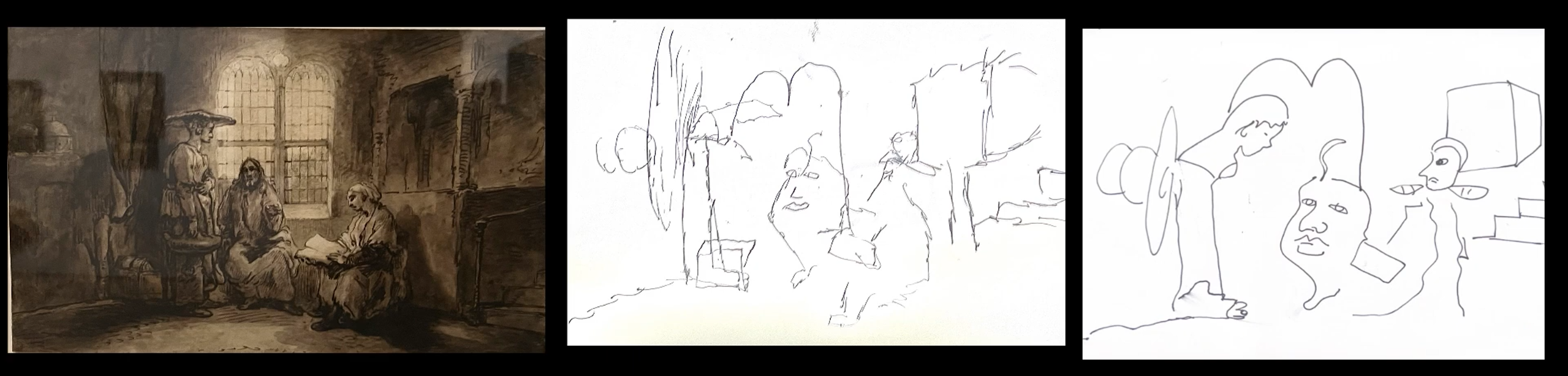
Novel drawing exercise: Person 1 chooses an artwork and sketches it without ever looking down at their sketchpad. Person 2 attempts to redraw the original artwork from person 1's sketch without ever having seen the original artwork.
Today I was challenged to produce a short video in an hour while situated in the Harvard Art Museums. My collaborator, Hang 'Harbor' Bai, and I frantically brainstormed and came up with a novel drawing exercise designed to explore how two participants view art.
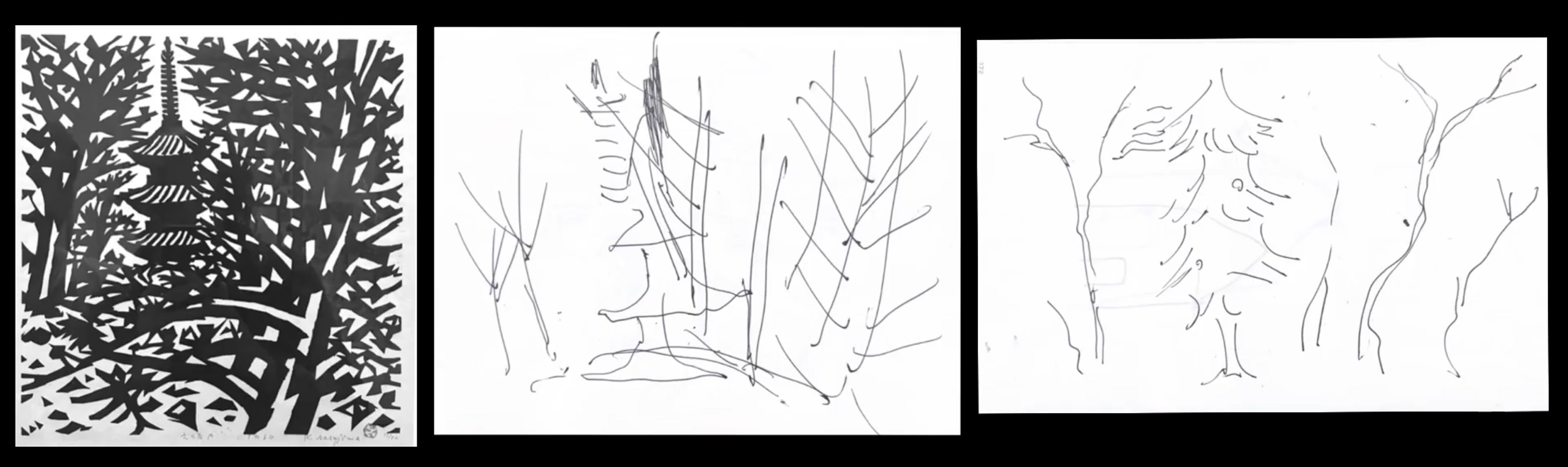
The exercise begins with person 1 selecting an artwork. Importantly, person 2 is not allowed to see the piece person 1 chooses. Person 1 attempts to sketch the chosen work without ever looking down at their sketchpad. The purpose of this being a 'blind' sketch is to add a significant amount of noise to the representation: the blind sketch will have portions twisted out of shape and misaligned as the drawer cannot look down at the page.
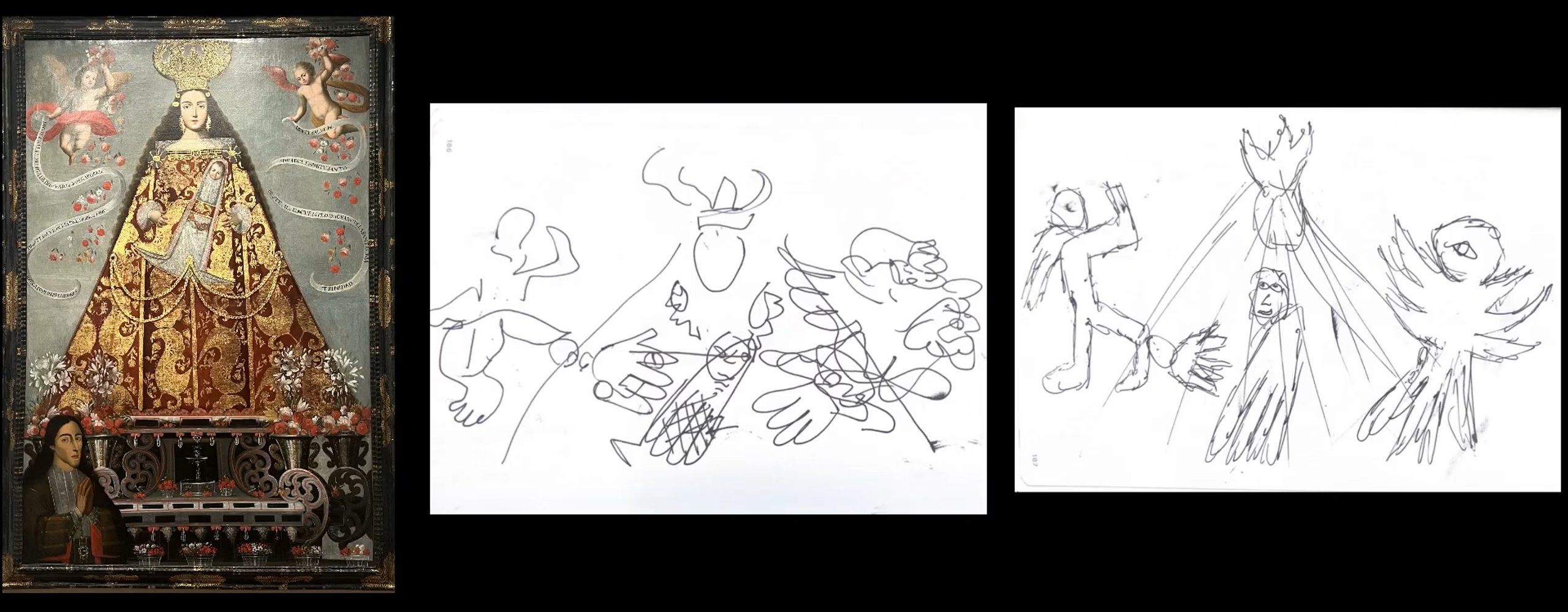
Then, person 1 hands the blind sketch to person 2. Person 2 has never seen the original artwork that produced the blind sketch and is tasked with resketching the original artwork based only on the blind sketch. Person 2 can look at what they are sketching, but thanks to how 'noisy' the blind sketch is, this reinterpreted sketch drifts even further from the original artwork.
In effect, the original artwork has gone through a double transformation: first transformed by person 1 by the warping effect of creating a blind sketch plus what person 1 focused on in their drawing, and second by how person 2 interprets the often ambiguous blind sketch into the final 'reinterpreted' sketch.

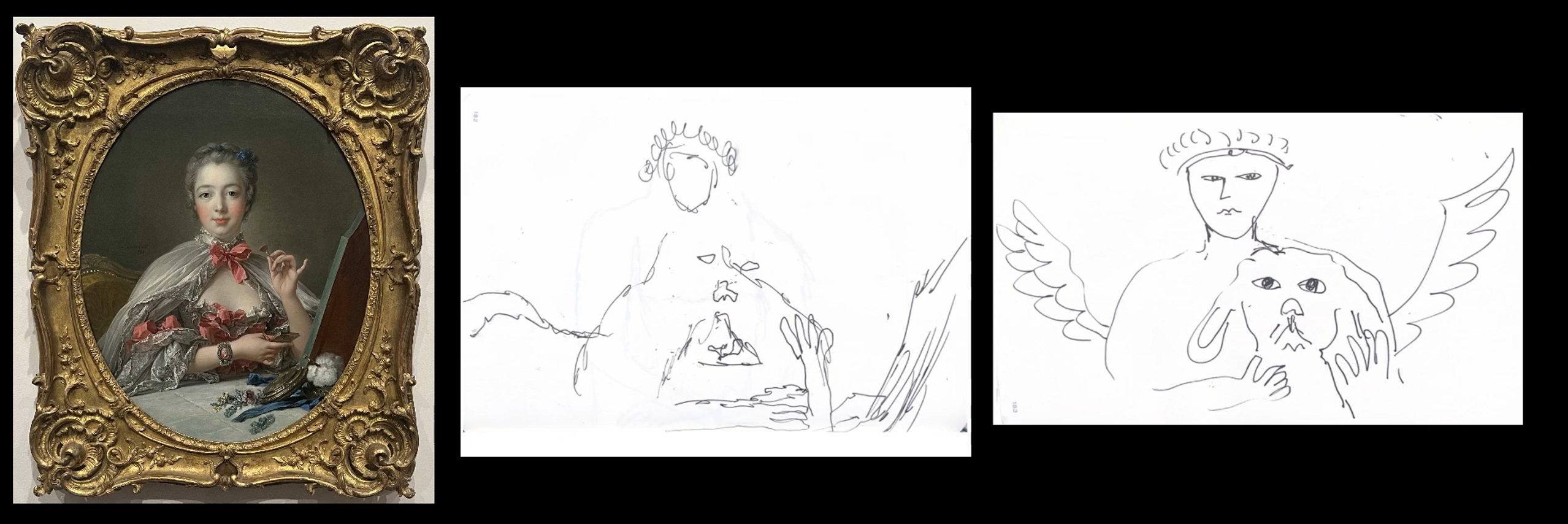
The goal of this exercise is to get insight into how people generally, and the participants specifically, see art. Person 1 is not simply producing a noisy sketch due to being unable to look at what they are drawing; they are also making judgment calls about what is important in an artwork. For example, the beautiful frames around the artworks were often excluded in the blind sketch, and the portion of the artwork that person 1 believed to be the 'focus' of the piece was often drawn more clearly.
Person two is also representing their perspective on art when producing the reinterpreted sketch. As the original artwork is in an art museum, the beliefs of person two about what belongs in such a place come into play. For example, angelic wings were added to a reinterpreted sketch in the European Renaissance section. These wings were not present in the original artwork, but as person two believed that they made sense in the current curation of work, errant lines in the blind sketch were reinterpreted into wings.
We noticed that faces were the feature most likely to survive this double transformation. This makes a lot of sense as human minds are hardcoded to recognize faces, even where none exist. This effect is called face pareidolia.
Other trends were more individual. Harbor and I swapped roles each round and generally, I reinterpreted artwork to be more abstract while Harbor reinterpreted artwork to be more representational, potentially speaking to our respective educations in art.
We found this exercise to be legitimately fun! We highly recommend trying it out next time you find yourself at an art museum with a friend! The sense of realization you get when you are the person drawing the final, reinterpreted sketch and you finally get to see what it was that you were trying to reproduce is quite satisfying. Harbor and I were able to learn quite a bit about how different our perspectives upon the same piece can be due to our interpretations and misinterpretations of each other's sketches.